The Complete Guide to Choosing Bedroom Bedding for Your Bedroom
Good bedroom bedding should make the bed feel inviting at bedtime and manageable on laundry day. A strong choice is rarely a single “luxury” fabric or an impressive thread-count label. It is a system: sheets that suit your temperature, a top layer that matches the season, pillows that support how you sleep, and dimensions that genuinely fit the mattress.
Start with how you sleep rather than how a display bed looks. Are you warm at night? Do you prefer a crisp, hotel-like feel or a smooth, drapey finish? Is your mattress extra deep? Those answers narrow bedroom bedding choices much faster than color alone.
Use This Bedroom Bedding Decision Path
- Measure first: note mattress width, length, and depth, plus whether a mattress topper changes the fitted-sheet depth.
- Choose for temperature: hot sleepers usually benefit from breathable, lighter layers; people who sleep cold may prefer more insulating layers.
- Pick the sheet feel: decide between crisp, smooth, textured, or relaxed before comparing labels.
- Build the top layer: select a duvet, comforter, quilt, or layered combination that can be adjusted through the year.
- Finish with practical details: pillow count, closures, washable care, and an extra sheet set all affect daily use.
1. Get the Fit Right Before Choosing Fabric
For bedroom bedding, fit is the first comfort test: every layer should stay in place without feeling stretched or bulky.
A beautiful sheet set is frustrating if the fitted sheet pulls loose at the corners. Measure the mattress rather than relying only on a size name: mattress depths vary, and a topper can add several more inches. Check the fitted-sheet pocket depth and leave enough allowance for the elastic to grip underneath. For duvet covers and inserts, compare the stated dimensions instead of assuming every “queen” or “king” item uses the same measurements.
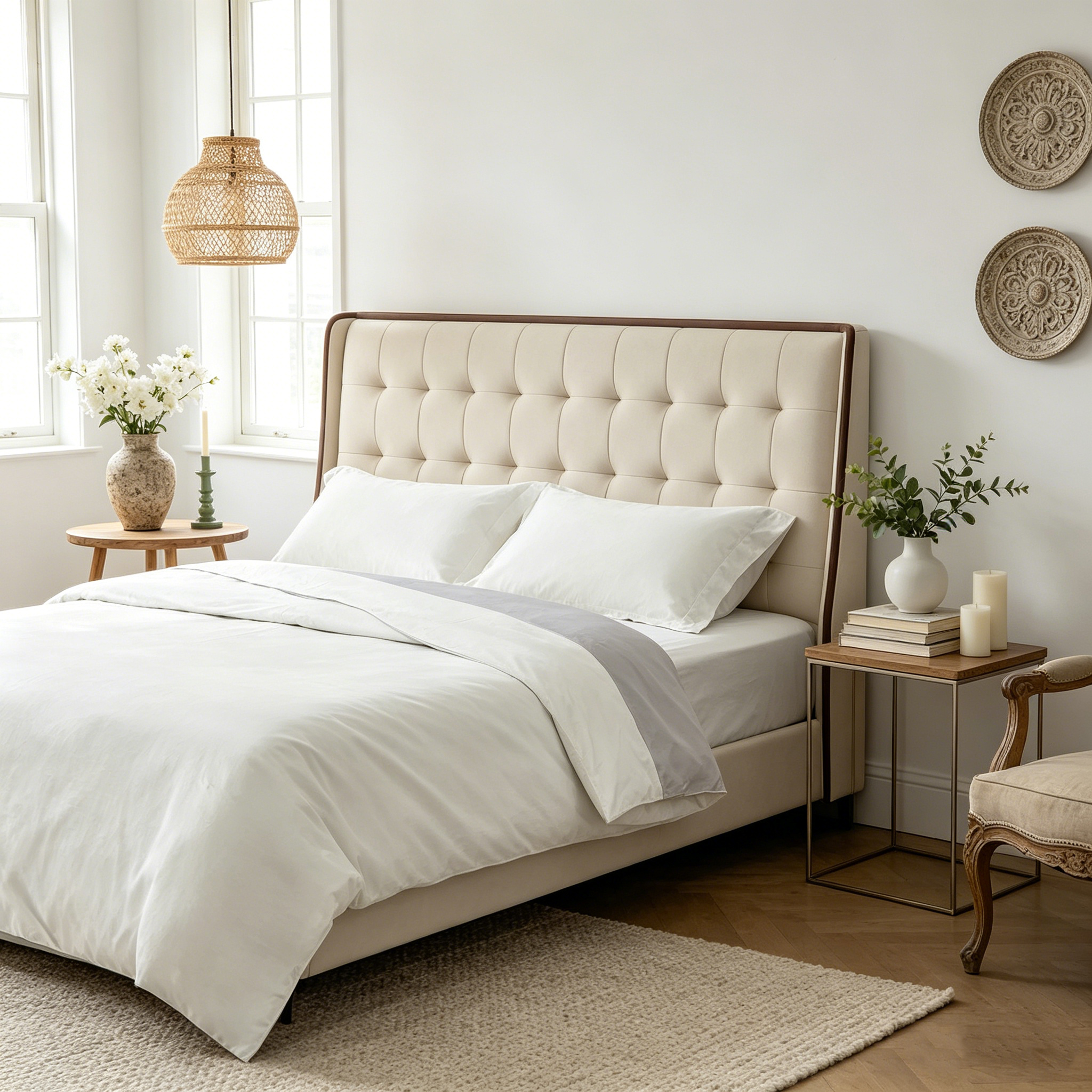
For a polished bedroom, keep the basic layers simple: fitted sheet, flat sheet if you use one, pillowcases, and a washable protective layer for the mattress. Add a duvet or comforter for warmth, then use a coverlet, quilt, or throw when you want extra texture. This approach makes bedroom bedding easier to adapt as the weather changes.
2. Match Sheet Material and Weave to Your Sleep Style
When comparing bedroom bedding fabrics, prioritize the feel you want night after night, not the most dramatic number on the package.
Material matters, but weave changes the feel just as much. Cotton remains a versatile option because it can be woven in different ways. A percale weave is typically crisp, matte, and breathable, so it often appeals to people who run warm or like a freshly pressed feel. Sateen has a smoother surface and a subtle sheen; it can feel silkier and may suit sleepers who prefer a warmer, more fluid drape.
Linen is naturally textured and relaxed, and it is often chosen for airy comfort and an informal look. It can feel less immediately smooth than cotton, which is not a flaw—it is simply a different tactile preference. Blends can add easier care or softness, but read the fiber content so you know what you are buying.
A useful reset: thread count is one detail, not a verdict on quality. Construction, fiber quality, finishing, and how the fabric feels after washing all matter. If possible, touch a swatch or start with one set before replacing all your bedroom bedding.
3. Choose the Right Warmth Layer
Bedroom bedding works well as a flexible set of layers, because temperature needs can shift even within the same season.
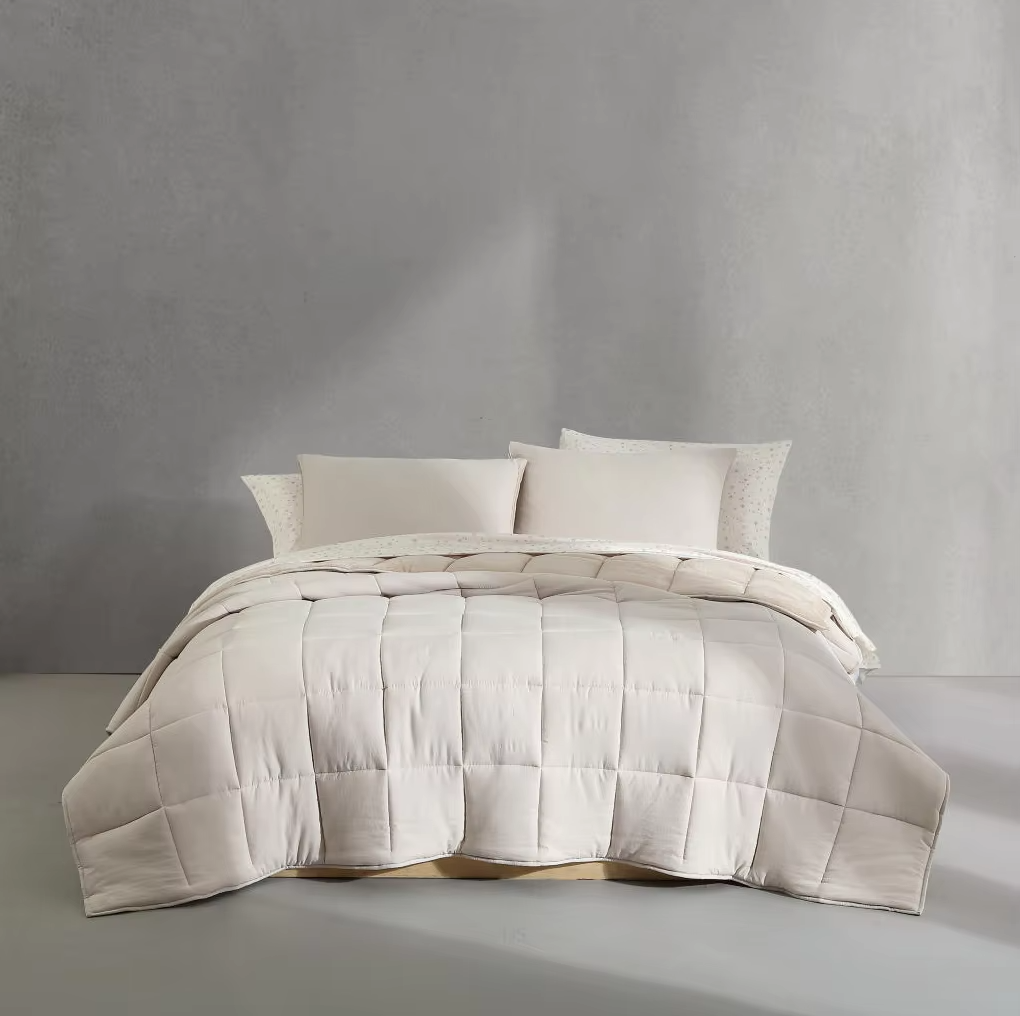
Think of the top layer as adjustable climate control. A duvet cover and insert create a flexible setup because the cover can be washed separately and the insert can be changed by season. A comforter offers an all-in-one look, while a quilt or coverlet gives lighter warmth and works well as an added layer.
- Warm sleepers: look for lightweight, breathable sheets and a lighter fill or easily removable top layer.
- Cold sleepers: use layers—such as a duvet plus a blanket—so warmth can be adjusted without changing the entire bed.
- Shared beds: consider separate blankets or a generously sized top layer when sleep temperatures differ.
- Seasonal bedrooms: keep a lighter summer option and a warmer winter option rather than forcing one setup to work year-round.
Softness and durability can involve a trade-off, and a heavier fill can feel too warm for some sleepers. A little flexibility usually serves a bedroom better than a single oversized, overly warm layer.
4. Do Not Overlook Pillows, Protectors, and Closures
These smaller pieces complete bedroom bedding that is comfortable, tidy, and easier to maintain.
Pillows influence comfort as much as sheets do. Side sleepers often need enough loft to keep the head and neck aligned, while back and stomach sleepers may prefer a lower profile. Personal comfort is the deciding factor, so treat labels as starting points rather than promises.
Protectors are the quiet workhorses of bedroom bedding. A washable mattress protector can simplify care, and pillow protectors add another washable barrier beneath pillowcases. For duvet covers, check whether the closure is buttons, ties, snaps, or a zipper, and confirm that corner ties are present if keeping an insert from shifting matters to you.
5. Coordinate Color and Texture Without Buying a Matching Set
Bedroom bedding can look intentional without being purchased as one identical set.
A coordinated bed does not require every item to be the same color. Begin with a neutral or favorite base sheet, then add contrast through a quilt, duvet cover, or pillow shams. Mixing matte percale, relaxed linen, or a softly quilted layer can make the bed look considered without becoming fussy.
If you are unsure, use a simple three-part palette: one main color, one supporting neutral, and one small accent. Patterns often work well when they vary in scale—for example, a larger print on the duvet with a quieter texture on the sheets. The aim is a bedroom that feels restful, not a showroom that is difficult to remake.
6. Plan for Care Before You Commit
Care-friendly bedroom bedding is more likely to stay fresh and useful over time.
Care instructions should influence the final choice. Make sure larger pieces fit your washing machine or that you have a realistic cleaning plan. General hygiene guidance commonly recommends washing sheets about weekly, while pillows and comforters need less frequent cleaning; follow each item’s care label.
Keep at least two sheet sets in rotation. That small decision makes laundry day easier and lets you extend the life of each set. Before first use, wash the bedding according to its label, then reassess fit and feel after a few cycles. Fabric handfeel can change after pre-washing, especially with natural fibers.
A Quick Bedroom Bedding Checklist
Use this final bedroom bedding check before ordering or refreshing the bed.
- Does the fitted sheet accommodate your actual mattress depth?
- Will the sheet fabric feel comfortable at your usual sleep temperature?
- Can the top layer be adjusted for warmer and cooler months?
- Are the pillowcases, protectors, and duvet closures practical for daily use?
- Can you wash and store every layer without turning routine care into a chore?
- Do the colors and textures support the feeling you want in the room?
Bedroom Bedding by Priority
If you are still narrowing the field, compare bedroom bedding by the priority that matters most. For hot sleepers, bedroom bedding should emphasize airflow and removable layers. For cold sleepers, bedroom bedding should make it simple to add insulation. For a deep mattress, bedroom bedding should begin with pocket depth. For a guest room, bedroom bedding should favor straightforward care and broadly comfortable materials.
For a primary suite, bedroom bedding may justify more attention to tactile preference. For children’s rooms, bedroom bedding may need easy-wash performance. For a rental or seasonal home, bedroom bedding should store compactly. For a shared bed, bedroom bedding should let each sleeper adjust warmth. These distinctions turn a generic shopping list into a more useful bedroom bedding plan.
Before checkout, test each bedroom bedding option against the same questions: Does this bedroom bedding fit the mattress? Does this bedroom bedding suit the sleeper’s temperature? Can this bedroom bedding be washed as instructed? Will this bedroom bedding still work when the season changes? A consistent comparison keeps bedroom bedding choices clear.
There is no universal bedroom bedding choice. The right bedroom bedding is the set that supports your routine, your climate, and the way you want the room to feel.
Final Thoughts
Useful bedroom bedding is the combination you notice the least when it is time to sleep: it fits, feels right, handles your climate, and is easy to keep clean. Measure first, choose materials for your own comfort, build warmth in adjustable layers, and leave room for practical care. With those decisions in place, style becomes the enjoyable final step rather than the only step.